


What We Can Learn From Thai GL’s Approach to Global Sapphic Storytelling 🎬
Updated: Jan 24
While other countries also produce Girls’ Love (GL) media, based on volume, frequency of production and release, and how structured the ecosystem appears, Thailand may offer insights worth examining for emerging GL industries.
They’ve created an ecosystem, from literature that can be adapted into series to GL actresses taking on global brand deals that expand the genre into new spaces that also contribute, intentionally or not, to broader soft power efforts.
This piece doesn't claim that Thai GL is the “best” or that it should be copied by everyone.
Rather, it examines how Thai GL has achieved global visibility, and what patterns, strategies, and structures other aspiring GL producers might adapt to their own cultural context.
Thai GL: A Case Study for Global Success in Sapphic Storytelling

Table of Contents:
Disclaimer
This post isn’t meant to discredit anyone’s strategy or suggest that everything Thai GL producers do is what everyone should be doing.
As with any creative industry, Thai GL is not perfect and still has areas for improvement.
Rather, I want to highlight what has worked, and how it worked, to help inspire others who wish to create GL, particularly for a global audience.
This analysis reflects my perspective as a Thai GL fan with a background in marketing. I'm not an industry insider, nor am I involved in TV or film production, artist management, or media promotion.
Any inaccuracies may stem from my limited visibility into behind-the-scenes decision-making.
It’s also not my intention to pit countries, creators, or companies against one another. As a GL fan, I want to see more sapphic stories told, across more cultures, languages, and regions, and I want them to succeed, so it's ideal to learn from those that already succeeded.
In some cases, I’ll reference the Philippines, my home country, since this is the market I'm most familiar with. Please adapt these observations to your region or context.
What is Soft Power?
It’s difficult to talk about GL without touching on soft power.
Soft power is a country’s ability to influence outcomes through attraction and persuasion rather than coercion or force. Culture, including media, storytelling, and the values shown in them, is one of its most powerful tools.
GL may contribute to soft power by using culturally rooted love stories to create emotional connection, global visibility, and positive associations with a country’s people and creative identity, without overt promotion.

Resources that contribute to soft power include culture, values, and policy.
If you look at GLs across countries and regions, they all offer something different, whether in values, relationship dynamics, and other elements influenced by their unique cultural context.
For further reading: I highly recommend The Birth of Korean Cool by Euny Hong if you're interested in learning more about how a country can use culture in their soft power initiative.
How Does Thailand Define and Build Soft Power?
Depending on who you ask, Thailand’s definition of soft power can vary. This video from Thai PBS shared several perspectives on what soft power means for Thais:
If we look at the institution with the greatest capacity to drive impact — the Thai government — soft power can be framed through its “5Fs” strategy: Food, Film, Fashion, Fighting, and Festival.
In 2023, Thailand proposed investing THB 5.1 billion into its National Soft Power Strategy, with the aim of generating THB 4 trillion in economic value and creating millions of jobs.
GL intersects naturally with several categories, particularly film, fashion, food, and festivals.
Soft Power in Thai GLs
The Loyal Pin as a Soft Power Case Study
One of the best examples of soft power in Thai GL is FreenBecky’s The Loyal Pin, and with good reason, as the Thai government partnered with Idol Factory in its production.
As of writing, TLP has garnered more than 288 million views on YouTube, with audiences spanning Asia, Europe, Australia, and both North and South America.
While views don’t necessarily equate to soft power, what matters is what audiences are exposed to, as The Loyal Pin is one of the finest showcases of cultural heritage in Thai GL.
TLP managed to hit 4 out the 5Fs in Thailand's soft power strategy: fashion, food, festivals, and as it's a series, film. If you want to read more about the cultural significance of TLP, check out this post.
Other Examples of Soft Power in Thai GLs
Food
Food is one of the most accessible ways Thai culture is introduced in GLs, as it's universal.
Everybody eats, and even though there are varying cultural traditions around food, it's one of the easiest cultural elements to understand and try out.
Moo Krata (Thai BBQ/Hotpot), for instance, appears frequently across several GL series.

Beyond the dish itself, the communal nature of eating Moo Krata reflects Thai social values. For foreign audiences, this style of dining may be unfamiliar so it becomes interesting rather than ordinary, which is how you'd typically view a scene involving food.
Beyond a delicious dish, Moo Krata may represent spending intentional time with loved ones, sharing food equally, and valuing togetherness, values that reflect Thai culture, but resonate universally.

Fashion
Fashion can be another extension of soft power, and one that travels easily across borders.
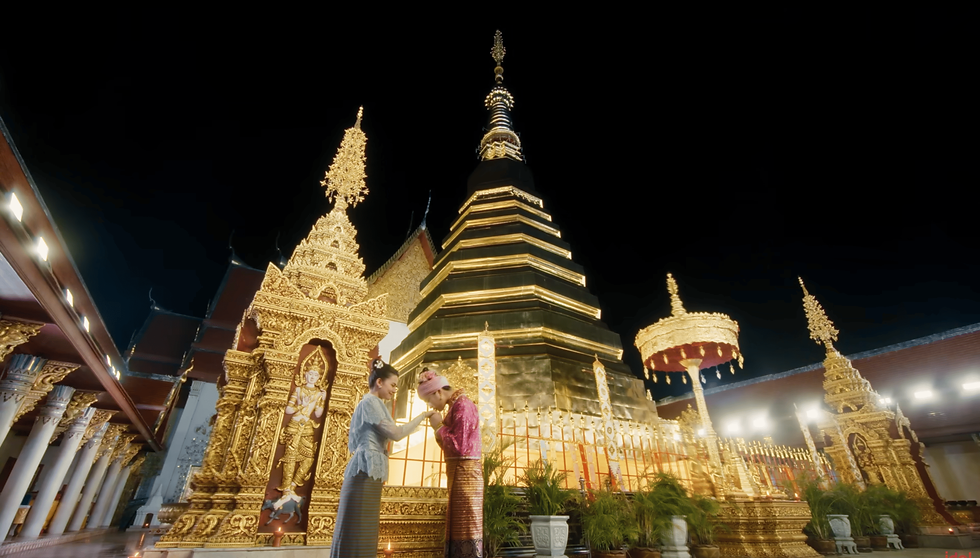
Traditional fashion, specifically Teen Jok Sarong, featured in The Loyal Pin, showing how local traditions can be weaved into a sapphic love story. Scenes like this could help spotlight local artisans, increasing interest in indigenous crafts and related businesses.
Additionally, both on and off screen, Thai GL actresses endorse local fashion brands. Some even launched their own labels, selling to both domestic and international markets.
Festivals
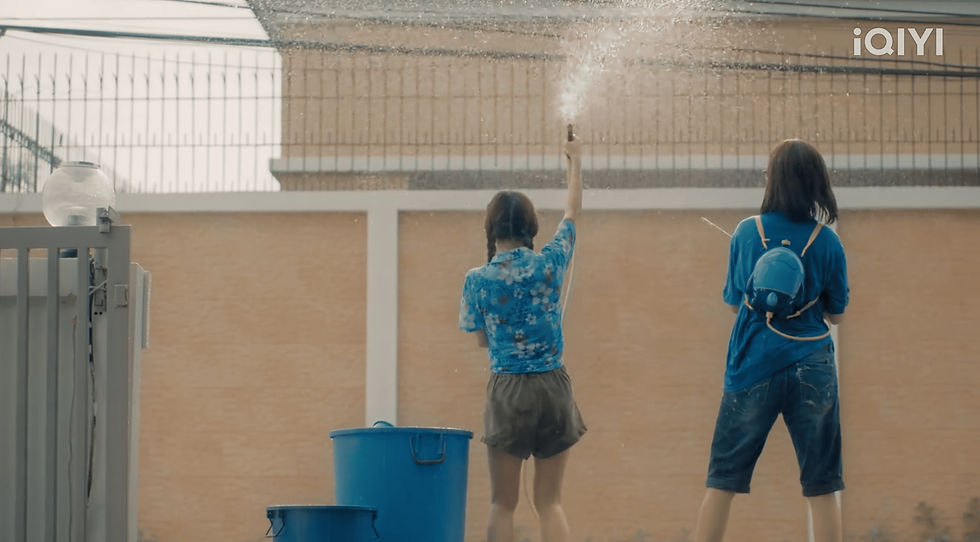
Songkran, Thailand’s traditional New Year festival, is perhaps best known internationally for its water celebrations. It's been featured in shows like 23.5 and Whale Store xoxo.

As one of Thailand’s most prominent festivals, Songkran plays a major role in the country’s soft power strategy by showcasing Thai values and encouraging tourism.
What makes Thai GL particularly effective as a soft power vehicle is that cultural representation rarely feels forced.
Rather than pausing the narrative to explain Thailand to foreign viewers, cultural elements are woven seamlessly into characters, relationships, everyday life, and even conflict.
Culture becomes context, not spectacle, and that distinction matters.
Instead of asking international audiences to learn about Thailand, Thai GL invites them to observe, feel, and eventually desire participation in Thai culture, whether through food, fashion, travel, or language. This is how attraction naturally forms.
What We Can Learn From Thai GL
Thai GL didn’t become globally visible by accident. While timing and luck certainly play a part, there are observable patterns and strategies that other creators can adapt to their own context.
Observing what worked in other countries can provide inspiration and insight. The goal is to adapt, not imitate.
Tip #1: Stay True to Your Local Roots, But Think Globally
One of the biggest misconceptions about appealing to an international audience is the belief that content needs to be “watered down” or westernized. Thai GL proves the opposite.
Local specificity can create global appeal.

Thai GLs don’t shy away from:
Using Thai language, even incorporating slang and regional languages
Showing everyday Thai settings, while also featuring tourist-centric locations. Filming locations may even become tourist destinations:
Centering cultural norms, family structures, and social hierarchies
Featuring uniquely Thai elements such as superstitions and folk beliefs
At the same time, its emotional core, such as female yearning, class differences, first love, reconciliation, remains universally understood.
For countries, this could mean:
Letting local values exist naturally. This could include close family ties, community-oriented living, religious tension, and class mobility.
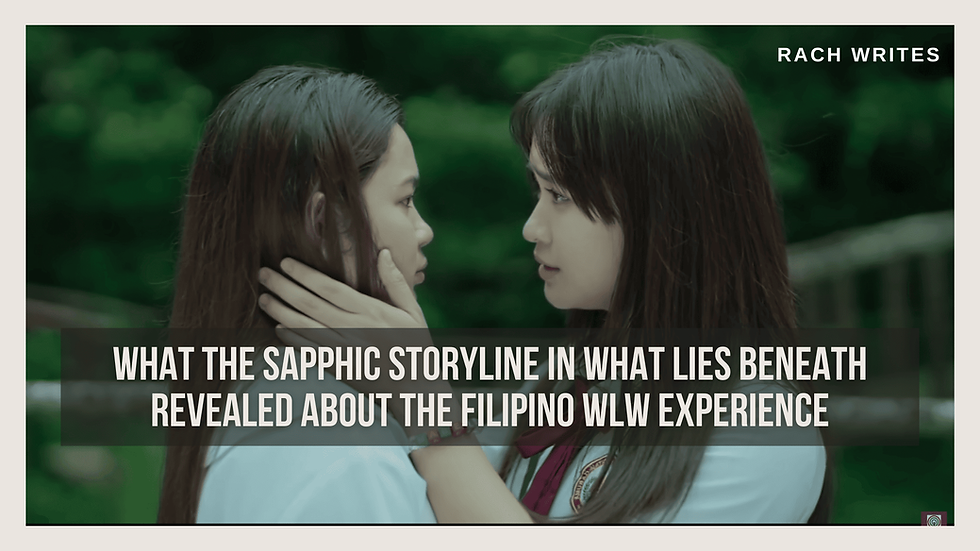
What Lies Beneath's portrayal of falling in love with another woman amidst conservative religious beliefs resonated for a reason: it reflected a reality all too familiar, and in effect, became validating and healing for some people.
Using local languages, food, and traditions without over-contextualizing them. Show them as they appear in real life.
If you feel that audiences may need more context, you can always explain on social media. This could even open doors for fan engagement (e.g. 'Ask me' tweets), which is important when promoting a GL.
Trusting audiences to connect emotionally even if not every cultural detail is immediately familiar

On potentially sensitive content: Please take note that some practices may be more contentious across cultures, so it's best to tread lightly and take time to research, especially if you're targeting a specific market.
For example, corporal punishment may be less controversial in some societies, while viewed as harmful, or even criminal, in others.
If such elements are necessary to the story, adding disclaimers, contextual framing, or info on where audiences who may be affected can get support or resources, can help balance creative freedom with cultural sensitivity.
It's also important to add it in such a way that doesn't glorify harmful behavior.

Whenever possible, it's also good to use a big platform like a global GL series to highlight good causes.
Another important consideration for global reach: always provide English subtitles from day one.
Making content immediately accessible helps foreign audiences connect with the story and culture without waiting or guessing.
Global audiences don’t need everything explained. They need something authentic to connect with emotionally.

Tip #2: Gauge Where and When to Add Paywalls
Thai GL producers have become adept at balancing accessibility with monetization.
Most series:
Offer free episodes on platforms like YouTube (and don't forget the English subs). Especially for productions that haven't gained recognition yet, people will be less likely to pay just to watch a GL, especially when there lots of of free Thai GLs on YouTube.
Monetize around the content, not just the content itself. Add value through fan meetings, merchandise, behind-the-scenes, exclusive cuts, and international events.
This strategy:
Lowers the barrier to entry for international audiences
Creates multiple revenue streams sustained by engaged fandoms even after the show has aired

I'd like to stress this point again, as this is something I feel may be easier or cheaper to implement, but could bring far greater returns: accessibility is key.
Providing English subtitles from day one ensures foreign audiences can engage immediately, helping stories and culture resonate globally without delay. This may sound small, but it’s one of the most impactful choices a production can make.
Paywalls are most effective after recognition and emotional investment have already been established.

For emerging GL industries (or any digital content hoping to go global), this is an important lesson:
Locking content too early behind subscriptions or region-restricted platforms can limit reach, especially when the goal is to build soft power and long-term cultural export.
If you can, prioritize access first, then monetization later.
Tip #3: Treat GL Actresses and Queer Creators as Cultural Ambassadors
One of Thai GL’s most underrated strengths lies outside the shows, in artist and talent positioning.
Thai GL actresses aren’t marketed solely as performers in a niche genre, but are also positioned as:
Fashion icons
Brand ambassadors
Event headliners
Public figures who embody modern Thai identity
Their visibility in global fashion weeks, ad campaigns, and international fan events extends Thai GL beyond streaming platforms and into lifestyle and consumer culture.
Involve Queer People, Especially in Creative Decisions
It’s also equally important to involve queer creators in the production process.

Writers, directors, consultants, and other team members with lived LGBTQIAN+ experiences bring authenticity, depth, and nuance to the stories.
When queer voices help shape content, it ensures representation isn’t performative and that the narratives resonate meaningfully with both local and global audiences.
For other countries, this requires a shift in mindset:
GL actresses and queer creators don’t just promote a series; they promote a country’s creative output and authentic storytelling.
Strategic brand partnerships can elevate both the talent and genre.
Long-term artist and creator development is as important as the show itself.

When fans follow actresses and creators across platforms, brands, and borders, soft power and social impact can scale naturally.
Why This Matters Beyond Thai GL
Thai GL is no longer just a niche genre; it’s becoming an exportable cultural product with real economic, diplomatic, and social implications.

It demonstrates that:
Niche genres can drive mainstream influence
LGBTQIAN+ stories can function as vehicles for soft power and meaningful representation
Digital-first fandoms can outperform traditional marketing models
Thoughtful storytelling can provide visibility, normalize queer experiences, and inspire social dialogue in countries where LGBTQIAN+ rights are limited

Rey (Arhoung Nattawadee) and Print (Pam Tarradee) in Queendom
For other countries, the goal isn’t to replicate Thai GL beat-for-beat, but to study the system behind its success:
A strong literary ecosystem
Digital-savvy promotion and global accessibility
Strategic alignment between government, private sectors, and creators
Long-term investment in talent, storytelling, and social impact
Soft power and socially conscious media aren’t built overnight. But Thai GL shows that when culture, commerce, fandom, and social awareness align, even a genre once considered niche can resonate globally, empower communities, and create sustainable opportunities.
Tip #4: Remember the Bigger Picture: Queer Media is More Than Just Entertainment
While GL series and films are entertaining, it’s important to remember that queer media carries social, cultural, and even political weight, especially in countries where LGBTQIAN+ rights are limited or under threat.
Stories about love, identity, and community can:
Provide representation for audiences who rarely see themselves on screen
Normalize LGBTQIAN+ experiences in mainstream culture, helping shift public perception
Inspire advocacy and conversation about rights, equality, and inclusion

For creators, this means approaching GL content with care, as the stories you tell can empower, validate, or educate, intentionally or unintentionally.
Even when your goal is entertainment, the context matters because in many places with limited or no rights for LGBTQIAN+ communities, visibility can already be a form of activism.
Balancing entertainment with meaningful representation doesn’t mean “preaching.” It means being aware of the broader impact your work may have, especially in regions where LGBTQIAN+ communities face challenges.
Thoughtful storytelling can help build cultural understanding while still being engaging, fun, and emotionally resonant.
Tip #5: Governments Can Play a Strategic Role in Supporting Queer Media
Even in conservative societies, supporting well-crafted GL and queer media can provide economic, cultural, and diplomatic benefits.
Government involvement doesn’t have to mean creative control.
The Loyal Pin demonstrates how collaboration between the government and studio helped the series reach global audiences while showcasing local culture.

Governments can consider:
Providing resources or grants for creators to raise production quality
Promoting projects strategically to international audiences, boosting cultural visibility
Positioning media as a soft power tool, highlighting local stories and talent (and the economic opportunities for everyone, like local businesses) rather than framing it as controversial content
Encouraging inclusion of queer creators to ensure authenticity and avoid misrepresentation
Even cautious support can help local GL content succeed internationally, strengthening soft power, generating economic opportunities, and projecting a progressive yet culturally rooted image to the world, benefiting both the country and its creators.
Other countries shouldn’t aim to copy Thai GL beat-for-beat, but may benefit from studying these patterns: authenticity, accessibility, strategic talent positioning, social awareness, and government support. These can help local GL industries thrive domestically and internationally.
Where the Opportunity Lies for Non-Thai GL Producers
Thai GL’s success also reveals gaps others can explore, not as competition, but as differentiation.

Opportunities include:
Greater genre diversity
Age-diverse stories, such as those that put older characters at the center
Diversity in social class and regional POVs, such as regional, working-class, or diaspora perspectives and cultures (e.g. "Bana" and the Bisaya representation in What Lies Beneath when Liezel briefly spoke in Bisaya)
Creator-driven, ensemble, or experimental formats
Diversity in sexual orientation and gender identities
Narratives that engage more directly with local social realities
These paths don’t represent a lesser version of GL, but a different one.
TL;DR
Thai GL shows how a niche genre can scale globally through:
Cultural authenticity
Early accessibility (with English subtitles from day one)
Strategic talent positioning
Queer inclusion behind the scenes
Institutional support
The lesson isn’t to copy Thai GL, but to study how ecosystem, culture, and strategy align, and adapt those insights locally.
A growing global GL landscape thrives not on duplication, but on diversity.


The line “local specificity can create global appeal” is the part I keep coming back to. Thai GL travels because the language, food, family structures and social tensions stay culturally specific while the emotional core remains easy to understand anywhere.
Your point about English subtitles and free entry points also shows that accessibility is part of the storytelling ecosystem, not an afterthought. I work on content for Blushcast, where we publish adult romance stories and audio: https://www.blushcast.com/categories/romance
This gave me a useful lens for thinking about how niche stories can cross languages without losing their identity.